Scripts and data pulls for reporting
Codex writes the script, connects to the right source, and returns the data your report needs. It runs in a persistent cloud environment, so the work does not stop when your laptop closes.

Stack
Codex is OpenAI's coding agent, available in the ChatGPT app. It runs parallel agents on engineering tasks, reviews pull requests, writes tests, and works across repositories with computer and browser tools. We build with it for marketing teams that need scripts, data pulls and site changes, and have little developer time to spare.
Book a callWhat it is
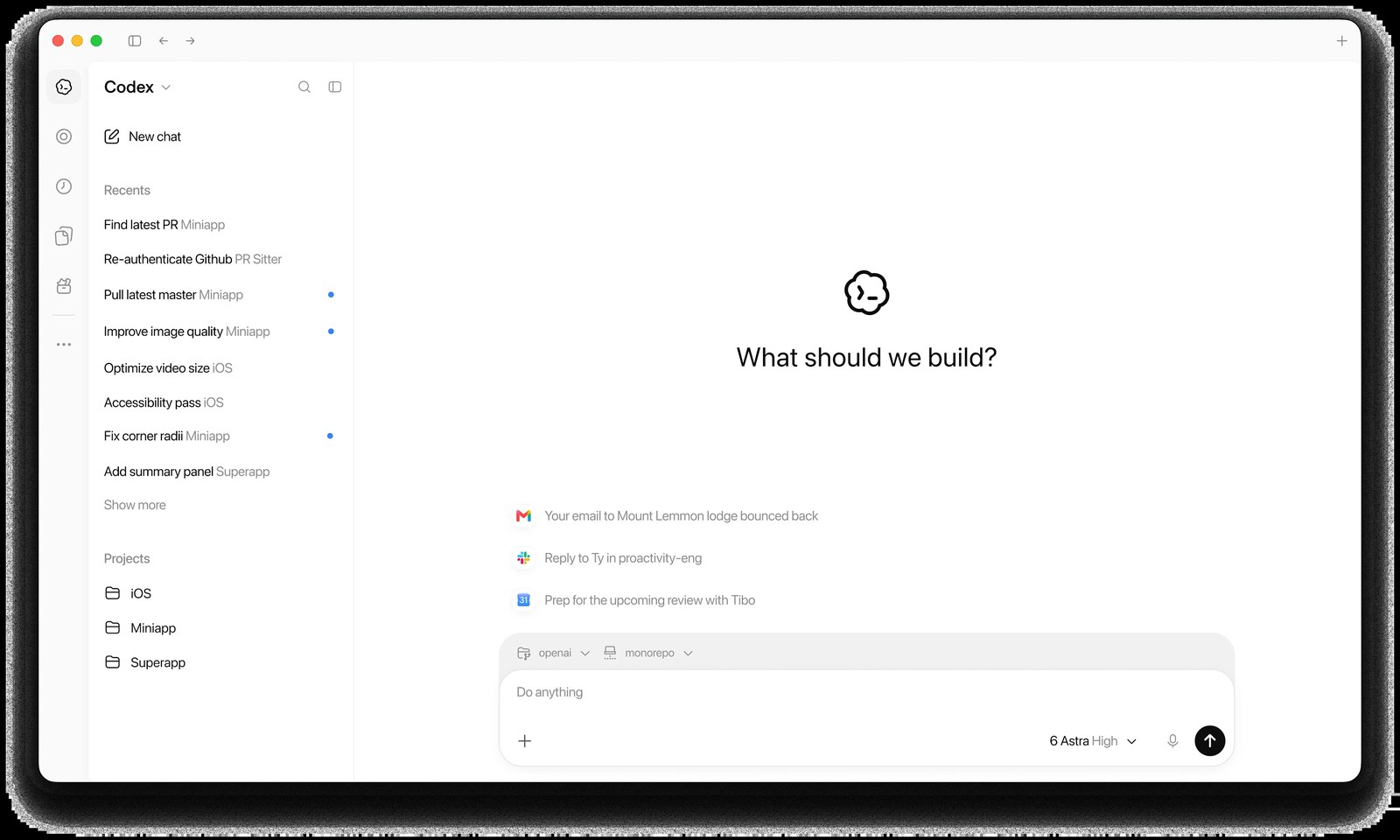
Codex is OpenAI's coding agent. It runs parallel agents on engineering tasks, reviews pull requests, writes tests, and works across repositories with computer and browser tools. Cloud environments persist when your laptop is closed. Plugins connect it to external tools. OpenAI says many people also use it for non-coding work.
Maker: OpenAI · Status: GA, available in the ChatGPT app and included in ChatGPT plans · Official site: openai.com/codex/
The marketing jobs we build with it
Codex writes the script, connects to the right source, and returns the data your report needs. It runs in a persistent cloud environment, so the work does not stop when your laptop closes.
Codex reads the codebase, makes the change, and opens a pull request for your team to review and merge. Your developer or agency stays in charge of what goes live.
BuildWire has published a guide on turning a repetitive task into a reusable skill with Codex Record & Replay. You show Codex a task once, and it turns those steps into an editable skill you can run again on new inputs.
Codex reads your automation code, writes tests, and can open pull requests when something breaks or needs updating. Your automations stay working without a full engineering queue.
When we choose it, and when we don't
Honest limits
Works well with
Related reading
FAQ
Codex is OpenAI's coding agent, available in the ChatGPT app. ChatGPT is a conversational assistant. Codex runs parallel agents on engineering tasks, reviews pull requests, writes tests, and works across repositories. It also has persistent cloud environments and computer and browser tools.
OpenAI says many people also use Codex for non-coding work. A marketer can use it to write scripts, pull data, and turn repetitive browser tasks into reusable routines with Record & Replay. For non-developer desktop workflows without any code, Claude Cowork is usually a better fit.
BuildWire has published a guide on this feature. Record & Replay is built for people who will never write a script. You show Codex a task once, and it turns those steps into an editable skill you can run again on new inputs. The guide covers picking the right first task, recording it, editing the skill, and building a library of routines you trust.
Codex fits marketing work that involves code. Scripts and data pulls for reporting are a good starting point. Site changes delivered as pull requests work well too. Maintaining the automations your team relies on is another common job.
Codex is available in the ChatGPT app and included in ChatGPT plans. Check openai.com/codex for current plan details, as availability and pricing can change.
Tell us the repetitive work. We will tell you whether Codex is the right tool to build it in.
Book a call