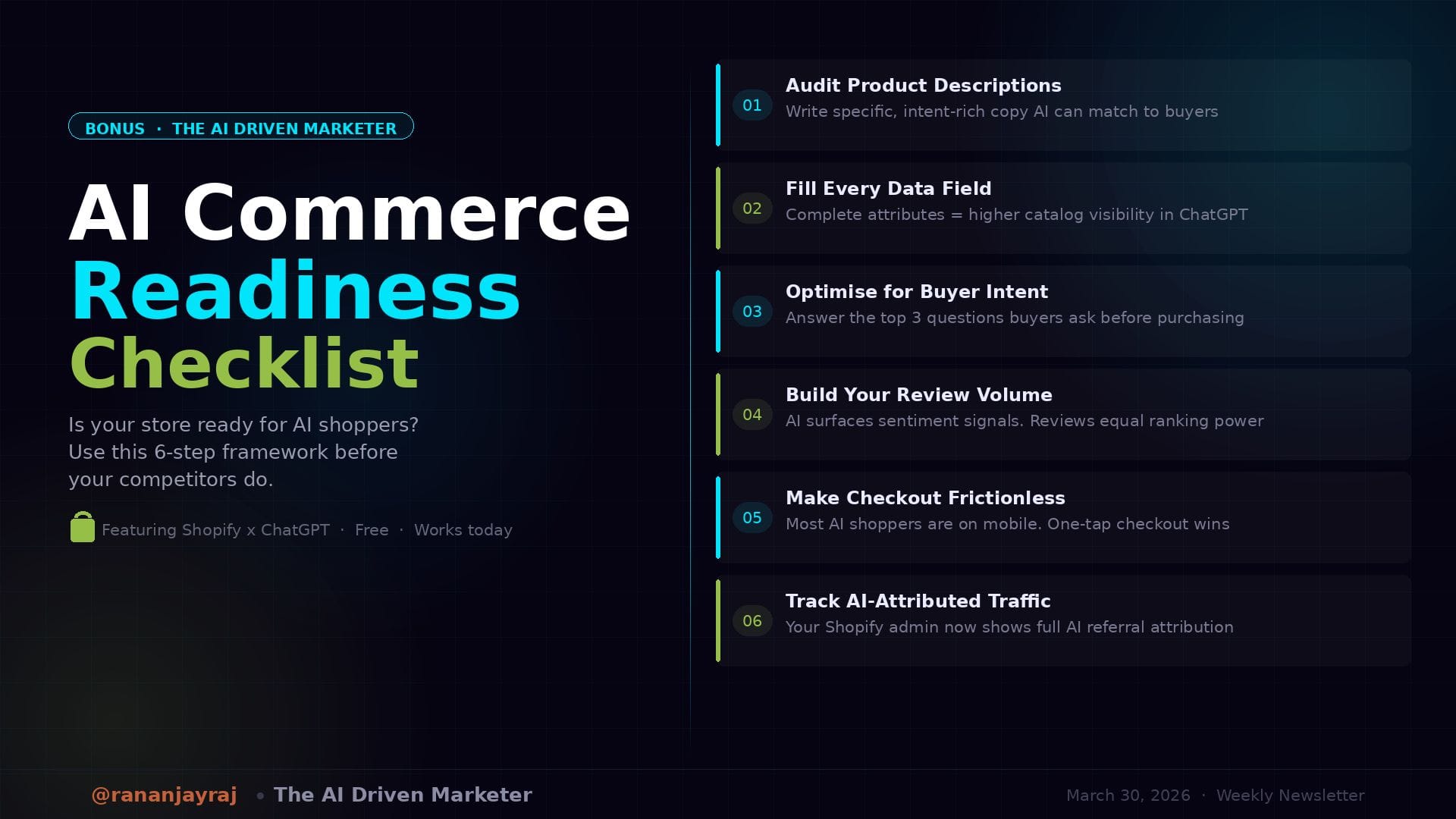
Shopify Agentic Storefronts just went live. ChatGPT is now a storefront. Gemini, Copilot, and other AI assistants are right behind it. The question is: is your store ready to be found and bought through AI?
Here is a six-step checklist to optimize your products for AI-driven discovery right now. This works whether you run a Shopify store, a digital product shop, or any product-based business.
Step 1: Audit Your Product Descriptions for Clarity
AI models match buyers to products based on the text in your listings. Vague or generic descriptions hurt discoverability.
- Are your descriptions specific? "Lightweight 14-inch laptop sleeve with waterproof lining for remote workers" beats "great for on the go."
- Do they include use cases? AI matches based on intent. Write what problem the product solves and for whom.
- Is the language natural? AI models prefer clear, conversational language over keyword-stuffed copy.
Step 2: Fill In Every Product Data Field
Shopify Catalog uses structured data to surface products in AI conversations. Incomplete fields reduce visibility.
- Fill all product attributes: material, dimensions, color, weight, compatibility
- Use consistent naming across your catalog
- Keep pricing and inventory synced so AI shoppers see accurate information at all times
Step 3: Optimize for Buyer Intent, Not Just Keywords
AI assistants handle questions like "What is the best moisturizer for combination skin under $40?" not keyword searches.
- Identify the top three to five questions your ideal buyer asks before purchasing
- Make sure your product descriptions directly answer those questions
- Add a FAQ section to your highest-traffic product pages to capture intent-rich queries
Step 4: Build Your Review Volume
AI product recommendations factor in review quality and volume.
- Set up automated post-purchase review requests (Klaviyo, Okendo, or Judge.me work well)
- Respond to reviews, especially negative ones. AI models read sentiment signals.
- Work review language back into your product descriptions using the exact words customers use
Step 5: Make Checkout Frictionless
AI shoppers complete purchases in your store checkout. A slow or confusing checkout kills the conversion.
- Enable Shop Pay for one-tap checkout
- Reduce checkout steps to the absolute minimum required
- Test your mobile checkout experience. The majority of AI assistant users are on mobile.
Step 6: Track Your AI-Attributed Traffic
Shopify now shows AI referral attribution in your admin dashboard.
- Set up a custom filter in your analytics for AI-referred sessions and orders
- Identify which products are getting discovered first via AI channels
- Double down by improving the listings that are already getting AI traffic
💡 Key insight: AI discovery rewards clarity. The merchants who write honest, specific, useful product descriptions will win the AI shopping era. If you have already invested in quality product content, you have a head start. If you have not, this week is the right time to start.